Channel Partner Blog
Guardrails, Not Roadblocks: Governance with Azure Policy and Management Groups
18 November 2026
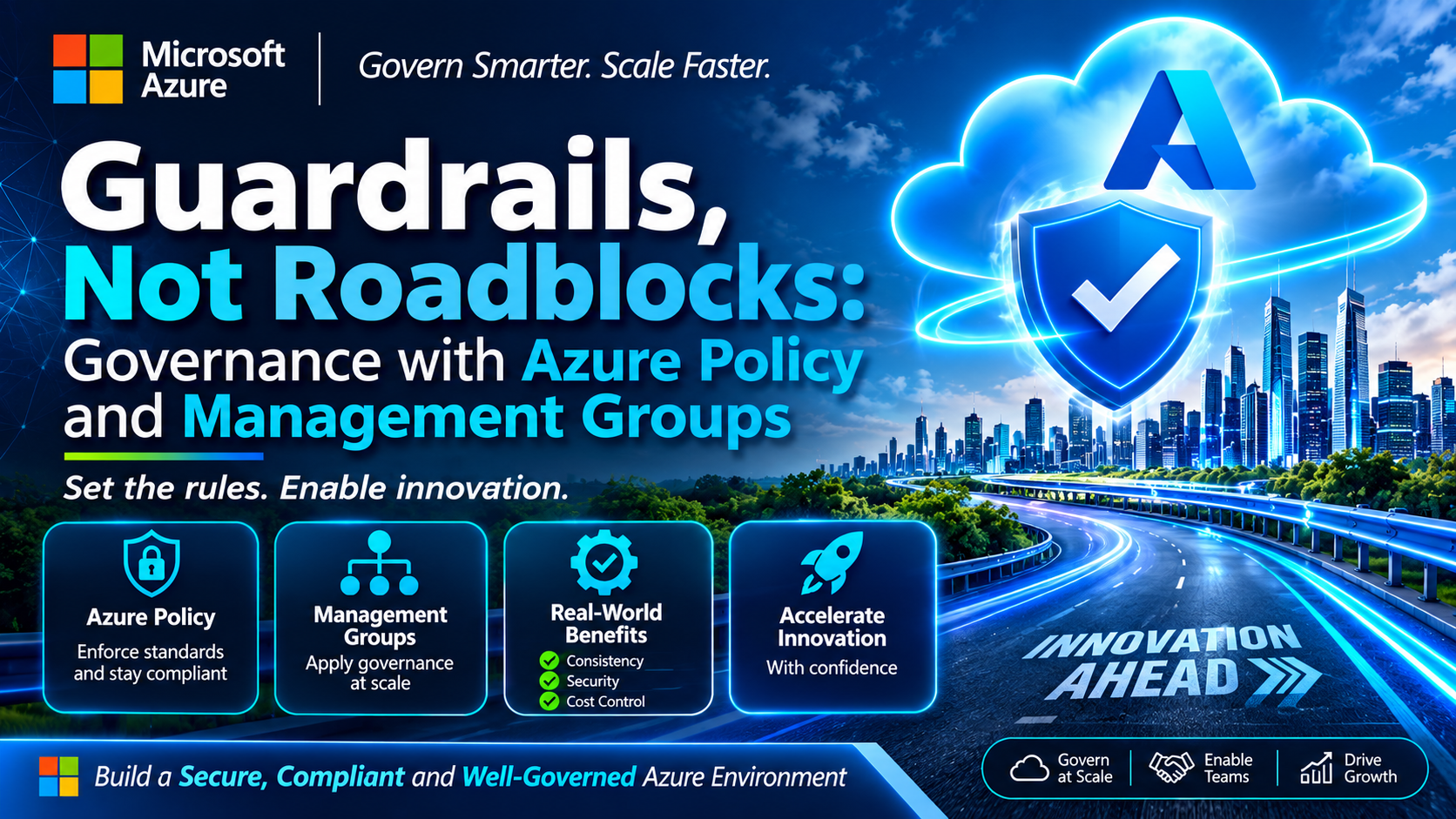
Set the rules once at the right scope, and let subscriptions inherit a consistent baseline
Updated 28 October 2026 | CHANNEL PARTNER
The Estate That Grew in the Dark
A growing Azure estate can quickly spread across subscriptions, teams and regions. Naming, tagging and access practices drift unless governance is intentional. Azure management groups and Azure Policy provide a way to establish consistent guardrails across that estate.
Why Governance Can't Wait
Based on the regulated and multi-subscription environments we see across our partner base, customers need controls that support data-location requirements, internal standards and repeatable security practices. Policy assignments can support those objectives, but they do not establish legal or regulatory compliance on their own. Customers must map controls to the legislation, contracts and sector requirements that apply to them, including POPIA where relevant in South Africa.
THE 4SIGHT ANGLE |
How Management Groups and Azure Policy Fit Together
Management groups provide a governance scope above subscriptions. Subscriptions can be organised into a hierarchy, and supported governance assignments inherit to child management groups and subscriptions. A hierarchy supports up to six levels of management groups, excluding the tenant root management group and subscription level. Every directory has one tenant root management group.
Azure Policy evaluates resources against defined rules. Effects include Audit, Deny, Modify and DeployIfNotExists, and related policies can be grouped into initiatives. Modify and DeployIfNotExists assignments that remediate resources require a managed identity with sufficient permissions to make the required changes.
Core management-group and Azure Policy capabilities do not generally carry a separate service charge. Remediation actions and integrated Azure services can still create billable resource consumption, so partners should cost the complete solution rather than describing governance as entirely free.
The Partner Opportunity
Start with a governance-design engagement: map the customer's organisation and environments to a management-group structure, then define a baseline covering allowed regions, required tags, permitted resource types and security requirements. Follow with compliance monitoring, drift reporting, controlled remediation and policy evolution as requirements change.
Reusable policy definitions and initiatives can become valuable partner intellectual property, but each customer baseline should still be reviewed for its architecture, operating model and regulatory obligations.
What the Customer Gets
When a subscription is placed beneath the appropriate governed management group, it can inherit the organisation's policy baseline. This supports consistency without relying on manual checks. Audit results provide visibility, while carefully tested enforcement can prevent defined non-compliant deployments.
Good governance should create a safe operating space rather than block delivery unnecessarily. That is why phased adoption matters: observe first, review exceptions, remediate deliberately and then enforce the controls that are well understood.
Getting Started
· Design a management-group hierarchy around durable governance needs rather than mirroring every organisational change.
· Begin with a high-value policy such as allowed locations in Audit mode.
· Review compliance findings and documented exceptions with the customer.
· Add required-tag and allowed-resource-type policies, then move suitable controls from Audit to Deny after testing.
· For Modify and DeployIfNotExists remediation, configure a managed identity with only the permissions required.
Microsoft Learn Resources
Learn more: Management groups overview - Hierarchy, inheritance, root management group and depth limits.
Learn more: Azure Policy overview - Policy concepts, effects and compliance evaluation.
Learn more: Azure Policy documentation - Definitions, assignments, initiatives and remediation.
Learn more: Manage management groups - Operational management of the hierarchy.
Let's Build Guardrails Your Customers Will Thank You For
Strong governance supports safer growth and keeps partners involved in future workload decisions. Visit 4Sight.cloud or contact channel@4sight.cloud to design a management-group and Azure Policy baseline that fits the customer's operating model.
